
Introduction
As manufacturers face increasing pressure to improve productivity, maintain consistent quality, and control labor costs, automation has become an important part of modern plastic processing.
A plastic welding production line can involve multiple repetitive operations, including material feeding, positioning, welding, inspection, and unloading. When these tasks rely heavily on manual labor, production speed and consistency can vary between operators.
Integrating automation with plastic welding equipment can help manufacturers create a more stable and efficient production process.
From high frequency welding and ultrasonic welding to specialized plastic sealing applications, automated systems can be configured around different products and production requirements.
This article explains how automation improves plastic welding production, which processes can be automated, and what manufacturers should consider when developing an automated welding solution.
What Is an Automated Plastic Welding Production Line?
An automated plastic welding production line is a manufacturing system that combines welding equipment with automated material handling, positioning, control, and inspection processes.
Depending on the application, an automated line may include:
-
Material feeding
-
Automatic positioning
-
Product clamping
-
Plastic welding
-
Cooling
-
Quality inspection
-
Automatic unloading
-
Data collection
The exact configuration depends on the product and production process.
For high-volume manufacturing, integrating these processes can reduce repetitive manual work and improve production consistency.
Why Automate Plastic Welding?
Manual welding operations can be effective for low-volume or highly flexible production, but they can become difficult to manage as production volume increases.
Common challenges include:
-
Operator fatigue
-
Inconsistent positioning
-
Variable cycle times
-
Manual handling errors
-
High labor requirements
-
Difficulty maintaining consistent output
Automation addresses these challenges by making key production steps more repeatable.
1. Automated Material Feeding
Material feeding is often one of the first processes considered for automation.
Depending on the product, automated feeding can involve:
-
Sheet feeding
-
Film feeding
-
Component loading
-
Conveyor systems
-
Robotic handling
A stable feeding system helps ensure that each workpiece reaches the welding station in the correct position.
This can reduce:
-
Loading errors
-
Operator handling time
-
Material positioning variation
2. Automatic Product Positioning
Accurate positioning is essential for consistent welding.
An automated positioning system can use:
-
Fixtures
-
Sensors
-
Mechanical stops
-
Vision systems
-
Robotic positioning
The purpose is to ensure that every product is placed consistently before the welding cycle begins.
This is particularly useful for products with:
-
Complex welding patterns
-
Multiple welding areas
-
Tight dimensional requirements
3. Automated Clamping
Clamping holds the material or component in the required position during welding.
An automated clamping system can provide repeatable:
-
Pressure
-
Position
-
Cycle timing
This is important because variations in clamping can affect welding quality.
For high frequency welding, consistent pressure and electrode contact are particularly important.
4. Automated Welding Cycles
Modern welding machines can control process parameters electronically.
Depending on the technology, the system may manage:
-
Welding power
-
Welding time
-
Pressure
-
Cooling time
-
Cycle sequence
Automated control helps reduce operator-to-operator variation.
It also makes it easier to establish standardized production parameters.
5. Automatic Inspection
Quality inspection can also be integrated into automated production systems.
Inspection methods may include:
-
Visual inspection
-
Dimensional measurement
-
Leak testing
-
Weld detection
-
Camera-based inspection
For applications where sealing performance is critical, automated leak testing can help identify defective products before they leave the production line.
6. Automatic Unloading
After welding and inspection, finished products can be automatically removed from the machine.
Possible methods include:
-
Robotic arms
-
Pneumatic systems
-
Conveyors
-
Mechanical ejectors
Automatic unloading reduces manual handling and helps maintain continuous production.
How Automation Improves Production Efficiency
Higher Output
Automation reduces time spent on repetitive manual operations.
This allows manufacturers to:
-
Increase production volume
-
Reduce idle time
-
Improve machine utilization
The actual productivity improvement depends on the product, machine cycle, and automation configuration.
More Consistent Production
Automated systems can repeat the same process sequence for every product.
This helps reduce variation caused by:
-
Different operators
-
Manual positioning
-
Inconsistent timing
-
Fatigue
Consistent production is particularly valuable for customers with strict quality requirements.
Lower Labor Requirements
Automation does not necessarily eliminate operators, but it can reduce the number of manual operations required.
Operators can instead focus on:
-
Equipment monitoring
-
Material replenishment
-
Quality control
-
Maintenance
This can improve overall labor efficiency.
Automation and High Frequency Welding
High frequency welding is well suited to automation because the process can be controlled through defined machine parameters.
An automated HF welding system may integrate:
-
Automatic feeding
-
Product positioning
-
Electrode movement
-
Welding cycle control
-
Cooling
-
Product unloading
For high-volume PVC or other suitable thermoplastic applications, automation can significantly improve process repeatability.
Automation and Ultrasonic Welding
Ultrasonic welding is also commonly integrated into automated production systems.
Because ultrasonic welding can have short cycle times for suitable plastic components, it can be combined with:
-
Robotic loading
-
Automatic fixtures
-
Conveyor systems
-
Automated inspection
This makes ultrasonic welding suitable for high-volume assembly applications.
Which Plastic Welding Processes Can Be Automated?
Depending on product requirements, automation can be applied to:
High Frequency Welding
Suitable for applications involving:
-
PVC
-
TPU
-
Flexible plastic films
-
Synthetic materials
Ultrasonic Welding
Suitable for:
-
Rigid plastic components
-
Electronic assemblies
-
Automotive parts
-
Medical products
Hot Melt Processes
Can be integrated with:
-
Automated material handling
-
Application systems
-
Pressing operations
Blister Packaging
Automation can connect:
-
Forming
-
Product loading
-
Sealing
-
Inspection
-
Packaging
The appropriate automation strategy depends on the production workflow.
What Factors Should Be Considered Before Automation?
Automation should not be added simply because a production line is manual.
Manufacturers should first evaluate the actual production process.
1. Production Volume
Automation becomes more attractive as production volume increases.
For low-volume production with frequent product changes, a highly automated line may not provide sufficient return on investment.
2. Product Standardization
Automation works best when products have consistent:
-
Dimensions
-
Materials
-
Welding patterns
-
Production processes
Frequent product changes may require more flexible automation.
3. Cycle Time
Manufacturers should identify the current cycle time for each operation.
This helps determine where automation can provide the greatest benefit.
4. Product Handling
Consider how the product moves between:
-
Feeding
-
Welding
-
Cooling
-
Inspection
-
Packaging
A poorly designed material flow can limit the benefits of automation.
5. Quality Requirements
Products with strict quality requirements may benefit from integrated inspection and process monitoring.
How to Calculate the Value of Automation
Manufacturers should evaluate automation based on total production economics rather than equipment price alone.
Important factors include:
-
Labor savings
-
Increased output
-
Scrap reduction
-
Machine utilization
-
Maintenance costs
-
Downtime
-
Product changeover time
A simple ROI analysis can compare the current manual process with the proposed automated system.
For example:
Automation value = Labor savings + Additional production value + Scrap reduction − Automation investment and operating costs
The actual calculation should use the manufacturer's production data.
Flexible Automation vs Fully Automated Production
Not every factory needs a completely automated production line.
Semi-Automated Production
A semi-automated system may combine:
-
Manual loading
-
Automatic welding
-
Automatic unloading
This can be a practical choice when:
-
Product variety is high
-
Production volume is moderate
-
Investment needs to be controlled
Fully Automated Production
A fully automated system may integrate:
-
Feeding
-
Positioning
-
Welding
-
Inspection
-
Unloading
-
Data monitoring
This is more suitable for:
-
High-volume production
-
Standardized products
-
Long production runs
Common Challenges in Plastic Welding Automation
Automation provides significant benefits, but it also introduces new engineering requirements.
Common challenges include:
Product Positioning
Small dimensional variations can affect automated handling.
Tooling Design
Fixtures and electrodes must work reliably with automated systems.
Product Changeover
Multiple product models may require quick-change tooling.
Machine Integration
Different equipment modules must communicate and operate in the correct sequence.
Maintenance
Sensors, actuators, robots, and control systems require regular maintenance.
A successful automation project should therefore consider the complete production system.
Why Customized Automation May Be Necessary
Standard automation equipment may not always fit specialized plastic welding applications.
A customized system can be designed around:
-
Product dimensions
-
Welding pattern
-
Production volume
-
Existing equipment
-
Factory layout
-
Required inspection process
For manufacturers with unique products, a dedicated machine or customized automated production system may provide better results than adapting a standard production line.
Why Choose Chenghao for Automated Plastic Welding Solutions?
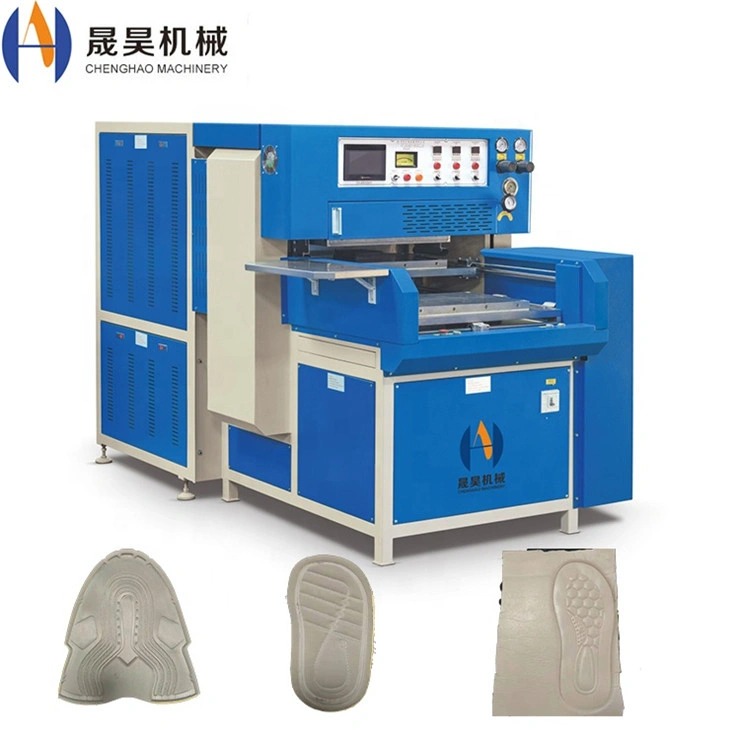
Chenghao Machinery provides equipment and customized solutions for plastic welding and related manufacturing processes.
Its capabilities include:
-
High frequency welding machines
-
Plastic welding equipment
-
Dedicated machines
-
Customized tooling and accessories
For manufacturers looking to automate plastic welding, Chenghao can evaluate the product, process, production volume, and automation requirements to develop a suitable equipment configuration.
Conclusion
Automation can significantly improve the efficiency and consistency of a plastic welding production line, particularly when manufacturers operate high-volume and standardized production processes.
The greatest benefits can come from automating repetitive operations such as:
-
Material feeding
-
Product positioning
-
Clamping
-
Welding
-
Inspection
-
Unloading
However, successful automation requires careful consideration of product design, production volume, cycle time, tooling, quality requirements, and return on investment.
For some manufacturers, semi-automation may provide the best balance between flexibility and efficiency. For high-volume production, a fully automated system may offer greater long-term value.
The right approach is to automate the processes that create the greatest measurable improvement rather than simply maximizing the level of automation.
Contact Chenghao Machinery to discuss your plastic welding automation requirements and develop a customized production solution for your application.